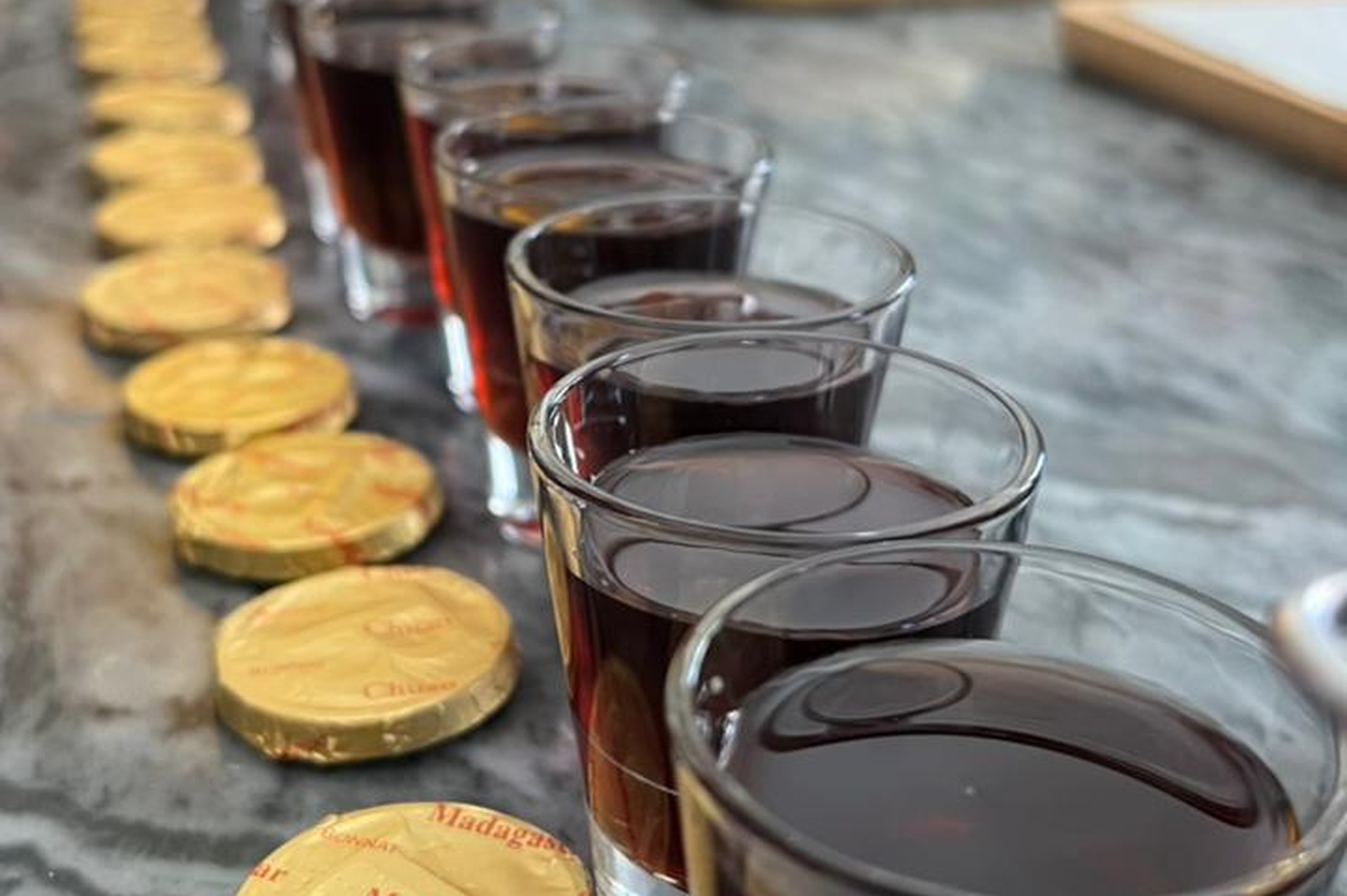
Ginjinha, or simply ginja, is a sweet liqueur made by soaking sour Morello cherries in grape brandy with sugar, sometimes with a stick of cinnamon. It is around 20% alcohol, served in a small glass, and in Lisbon it is drunk standing up at a counter, in one or two sips. You will be asked “com ou sem?”: with or without a cherry in the glass.
What does ginjinha taste like?
Like a cherry liqueur that has been told to calm down. Sweet, but with the sourness of the ginja cherry behind it, a little almond from the stones, and the warmth of the brandy at the end. Good ones are not syrupy. Cheap ones are, and you will notice.
“Com ou sem”: with or without the cherry?
Com elas means with the cherries, which have spent months in the alcohol and are stronger than they look. Sem elas means without. First time? Take it com. Then spit the stone discreetly, like everyone else on the square.
Where do you drink ginjinha in Lisbon?
The classic address is A Ginjinha, a tiny counter on Largo de São Domingos, next to Rossio, open since 1840. There is no room inside: you order at the counter and drink on the square. A few steps away, on Rua das Portas de Santo Antão, Ginjinha Sem Rival is the other old name. Both are worth one glass, preferably in the late afternoon when the square fills up.
You will also find ginja in most tascas and cafés around Alfama, Mouraria and Graça, often for a couple of euros. In the town of Óbidos, an hour north of Lisbon, it is served in a small chocolate cup that you eat afterwards. Fun once.
Is ginjinha the same as cherry brandy?
Not quite. Cherry brandy is often a distilled spirit or a sweeter, more industrial liqueur. Ginja is an infusion: the fruit sits in the alcohol for months, then the liquid is sweetened. The closest relatives are the homemade cherry liqueurs you find all over southern Europe.
What else should you drink in Lisbon?
Ginjinha is a one-glass ritual, not a tasting. For the rest of your stay, a few Portuguese drinks we would put on the list:
- Port, especially a cold White Port with tonic (the Portónico) or a 10 Year Tawny. Our guide to the types of Port explains the labels.
- Vinho Verde, fresh and light, with anything from the sea. See our Vinho Verde guide.
- Moscatel de Setúbal, a sweet fortified wine from just south of Lisbon. Very good with a pastel de nata.
- A red from the Douro, the Dão or the Alentejo, if you want to know what Portugal does best on the dinner table.
From ginjinha to a proper tasting
If the glass of ginja made you curious about Portuguese drinks, the next step is a seated tasting. At POP in Graça, a 20-minute walk uphill from Rossio or a short ride on Tram 28, we pour five Portuguese wines in about an hour for €35, or 5 Ports with dark chocolate for €50 (Port wine tasting in Lisbon). Sessions every day, every hour from 14:00 to 19:00 (last session). Book here.
Ginjinha is one stop on a good night out. Here is how we would plan an evening in Lisbon, and where to find a good glass of wine afterwards.
Questions we get asked
What is ginjinha made of?
Sour Morello cherries (ginjas) soaked in grape brandy, with sugar and sometimes cinnamon.
How strong is ginjinha?
Usually around 18 to 24% alcohol, so stronger than wine and weaker than brandy.
What does “com ou sem” mean?
With or without: whether you want a cherry from the bottle in your glass.
Where is the most famous ginjinha bar in Lisbon?
A Ginjinha, on Largo de São Domingos next to Rossio, open since 1840.