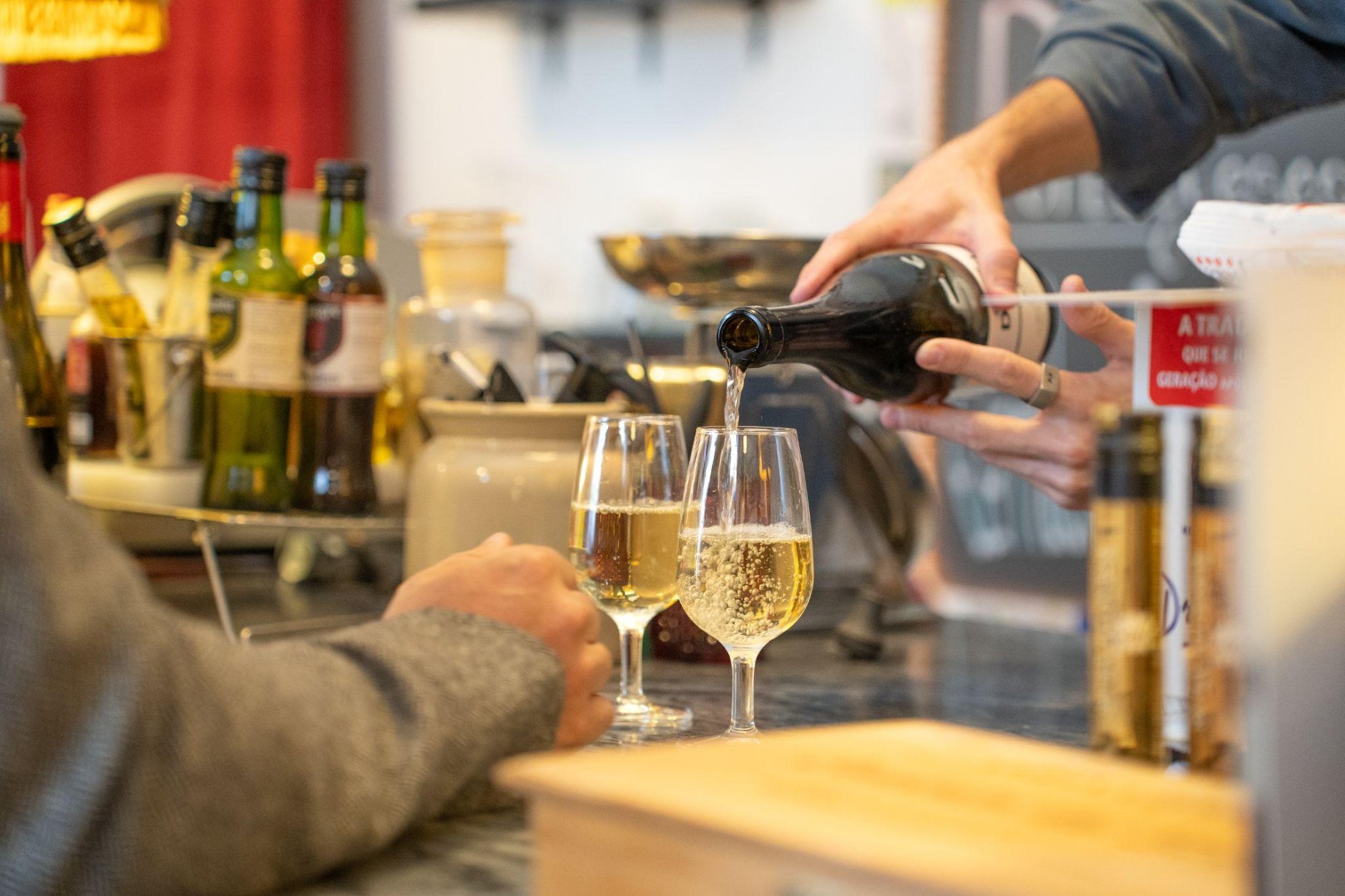
Vinho Verde is a wine region in the far north-west of Portugal, between the Douro river and the Spanish border. “Verde” means green as in young, not green in colour: the wines are made to be drunk fresh, within a year or two. Most are light whites, often with a slight sparkle, but the region also makes rosés, reds and some very serious Alvarinho.
Where does Vinho Verde come from?
From the Minho, the greenest and rainiest corner of Portugal, up towards Galicia. The Atlantic is close, it rains a lot, and the grapes keep a lot of acidity. That is what gives Vinho Verde its fresh, lemony bite. The region is split into nine sub-regions. The one name worth remembering is Monção e Melgaço, along the Minho river, home of the best Alvarinho.
Is Vinho Verde sparkling?
Sometimes, a little. The light prickle comes from a bit of carbon dioxide kept in the wine. In the past it came naturally from a second fermentation in the bottle. Today, in cheaper bottles, it is often added. Better producers mostly make still wines and let the acidity do the work. If you see “espumante” on the label, that one is fully sparkling.
Which grapes should you know?
| Grape | What it tastes like |
|---|---|
| Alvarinho | Richer and fuller, peach, citrus, a salty finish. The same grape as Albariño in Spain. |
| Loureiro | Floral, laurel and lime. Light and very aromatic. |
| Arinto (called Pedernã here) | Sharp, green apple and lemon. Ages better than people think. |
| Avesso | Rounder, almond and stone fruit, from the warmer south of the region. |
| Vinhão | A red grape. Very dark, very sour, drunk cool with grilled meat in the north. An acquired taste. |
How strong is Vinho Verde?
The simplest blends are around 9 to 11% alcohol, which is why they are the go-to wine for a long lunch in the sun. Single-grape Alvarinho and Loureiro are usually between 12 and 13%.
How do you pick a good bottle?
A few rules that rarely let us down:
- Look for a grape name on the label (Alvarinho, Loureiro, Avesso) rather than just “Vinho Verde”.
- “Monção e Melgaço” on an Alvarinho is a good sign.
- Check the year. Most Vinho Verde should be drunk within two years. A few Alvarinhos are an exception and get better with age.
- Avoid the bottles with very sweet, fizzy-pop descriptions on the back if you want to taste the region.
Not sure what the other words on the label mean? Our guide on how to read a Portuguese wine label covers DOC, Reserva, Colheita and the rest.
What do you eat with Vinho Verde?
Anything from the sea. Grilled sardines in June, clams à Bulhão Pato, octopus salad, a tin of good Portuguese fish on bread. The acidity cuts through salt and oil. It is also an easy aperitif, very cold, on a terrace.
Where can you taste Vinho Verde in Lisbon?
In most restaurants you’ll be offered the house Vinho Verde, cold and cheap. It is fine with lunch. To taste the good ones side by side, come to POP in Graça. Our 5 Wines tasting (€35, about an hour) pours wines from several Portuguese regions, and the shop sells Vinho Verde from family producers we know, with bottles from about €10. If you want to see where it sits on the map, read our guide to Portuguese wine regions.
Questions we get asked
Is Vinho Verde a green wine?
No. “Verde” means young. Most Vinho Verde is a pale white wine, and the region also makes rosé and red.
Is Vinho Verde sweet?
Most is dry or off-dry. Some cheaper, fizzier styles are a little sweet, and the label usually says so.
What is the difference between Vinho Verde and Alvarinho?
Vinho Verde is the region. Alvarinho is a grape grown there, especially in Monção e Melgaço, which gives fuller and more structured wines.
How should Vinho Verde be served?
Cold, around 8 to 10°C, and young, within a year or two of the harvest.