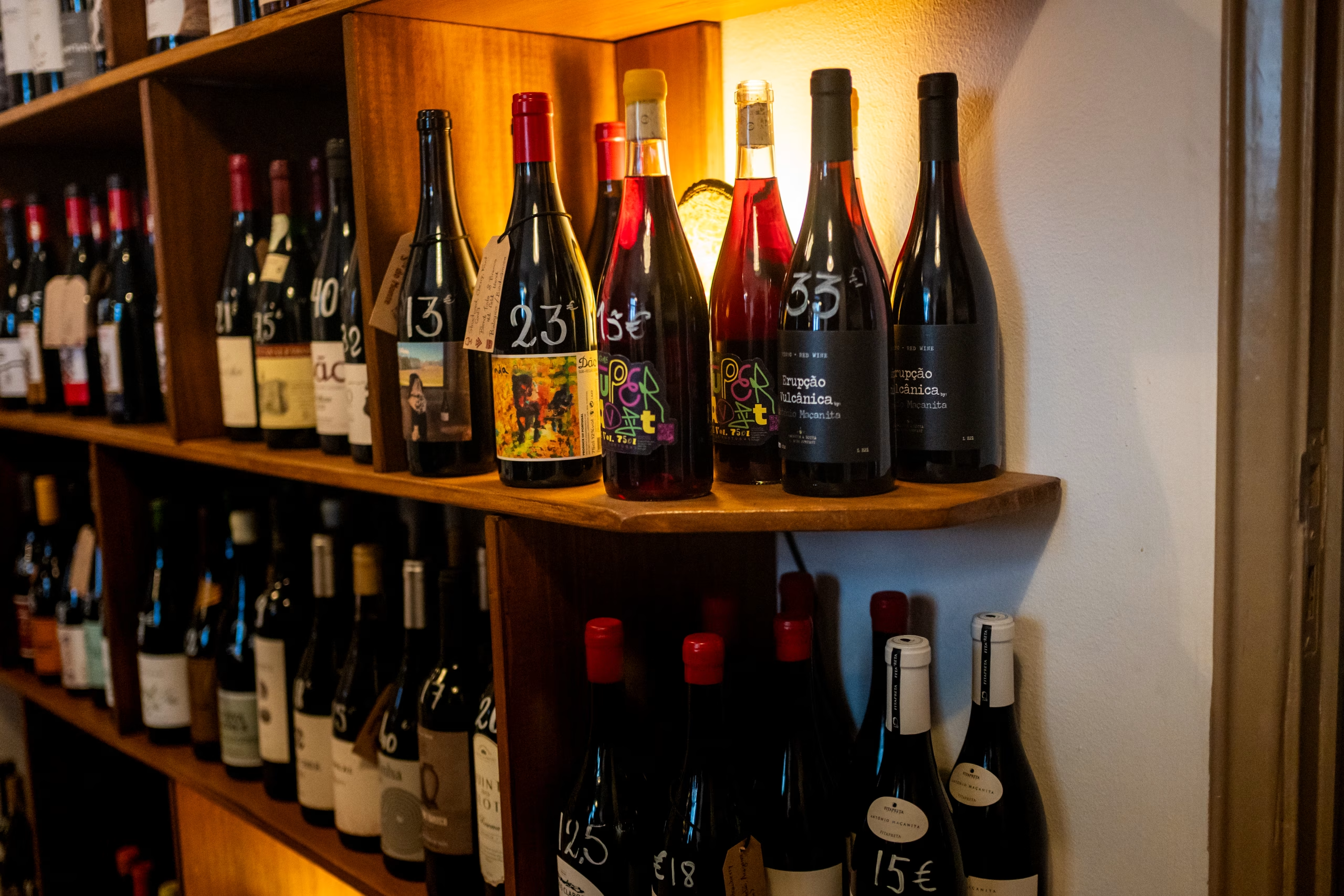
A Portuguese wine label tells you four things: the colour (tinto is red, branco is white), where the wine comes from (DOC or DOP for a strict appellation, Vinho Regional or IG for a wider area), how it was aged (Reserva, Garrafeira) and, more and more often, the grape. Once you know a dozen words, you can choose a bottle in any shop in Lisbon.
Colour and style
| On the label | Means |
|---|---|
| Tinto | Red |
| Branco | White |
| Rosé or Rosado | Rosé |
| Espumante | Sparkling |
| Seco / Meio seco / Doce | Dry / Off-dry / Sweet |
| Licoroso | Fortified (Port, Moscatel, Madeira) |
| Curtimenta | Skin-contact white, what elsewhere is called orange wine |
Where it comes from: DOC, DOP, Vinho Regional
DOC (Denominação de Origem Controlada), now also written DOP, is the strictest level. The wine comes from a defined area, such as Douro, Dão, Bairrada or Vinho Verde, and follows its rules on grapes, yields and ageing.
Vinho Regional, also written IG or IGP, covers a larger area (Vinho Regional Alentejano, Lisboa, Tejo…). The rules are looser. That is not a bad sign: many excellent producers choose Vinho Regional precisely so they can use the grapes they want.
Plain Vinho or Vinho de Portugal has no geographical indication. Mostly everyday wine, with some interesting exceptions from producers who ignore the system altogether.
To place the names on a map, see our guide to Portuguese wine regions.
Reserva, Grande Reserva, Garrafeira
Colheita followed by a year is simply the harvest year. On Port, Colheita means something more specific: a Tawny from a single year (our Port guide explains it).
Reserva means the wine comes from a single harvest, is a little stronger than the legal minimum and has been judged of higher quality by the regional commission. Grande Reserva goes one step further.
Garrafeira is the old-school top level, for wines aged longer before release, part of it in bottle. For reds, that means at least 30 months in total, 12 of them in bottle. You see it less today, but old Garrafeiras from the Dão or Bairrada can be wonderful.
A word of honesty: “Reserva” on a supermarket bottle at €4 does not mean much. On a small producer’s label, it usually does.
Other words you will see
- Engarrafado na origem: bottled at the estate.
- Quinta: estate, farm. Herdade is the word in the Alentejo.
- Vinhas velhas: old vines.
- Produtor / Produzido por: producer.
- Biológico: organic.
Ten grapes worth recognising
| Grape | Colour | Where | In the glass |
|---|---|---|---|
| Touriga Nacional | Red | Douro, Dão | Violet, dark fruit, firm tannins |
| Tinta Roriz / Aragonez | Red | Douro, Alentejo | The Tempranillo of Spain, red fruit, spice |
| Baga | Red | Bairrada | High acidity, sour cherry, ages for decades |
| Castelão | Red | Setúbal, Tejo, Lisboa | Soft, red berries, easy |
| Trincadeira | Red | Alentejo | Plum, herbs, a bit wild |
| Alfrocheiro | Red | Dão | Fresh, red fruit, elegant |
| Alvarinho | White | Vinho Verde | Peach, citrus, salty |
| Arinto | White | Lisboa, Tejo, everywhere | Lemon, very fresh |
| Encruzado | White | Dão | Textured, nutty, serious |
| Antão Vaz | White | Alentejo | Ripe tropical fruit, round |
Portugal has more than 250 native grape varieties, so this list is a start, not a test. If you like the fresh Atlantic style, our Vinho Verde guide goes further on Alvarinho and Loureiro.
Practise on real bottles
Reading labels is easier with a glass in your hand. In our 5 Wines tasting at POP (€35, about an hour, in Graça), the sommelier shows you each bottle and what its label says, so you can walk into any garrafeira in Lisbon and choose with confidence. Prefer something sweet? Try the Port wine tasting.
Questions we get asked
What does DOC mean on Portuguese wine?
Denominação de Origem Controlada: the wine comes from a defined region and follows its rules. It is now also labelled DOP.
Is Vinho Regional lower quality than DOC?
Not necessarily. The rules are looser, and many top producers use Vinho Regional to work with the grapes they choose.
What does Garrafeira mean on a wine label?
A wine aged longer before release, part of it in bottle. For reds, at least 30 months in total with 12 in bottle.
What does tinto mean?
Red. Branco is white.